
Stuck on “how” or “what next”? Theory rarely convinces people—examples do. And, so, our Blog is designed to make sustainability practical, not abstract Policies and targets can feel overwhelming. Our blog is designed to break them down into manageable steps—like reducing energy use, cutting waste, or rethinking supply chains—so businesses can actually act rather than stall. It shares real-world case studies (the biggest driver of action)
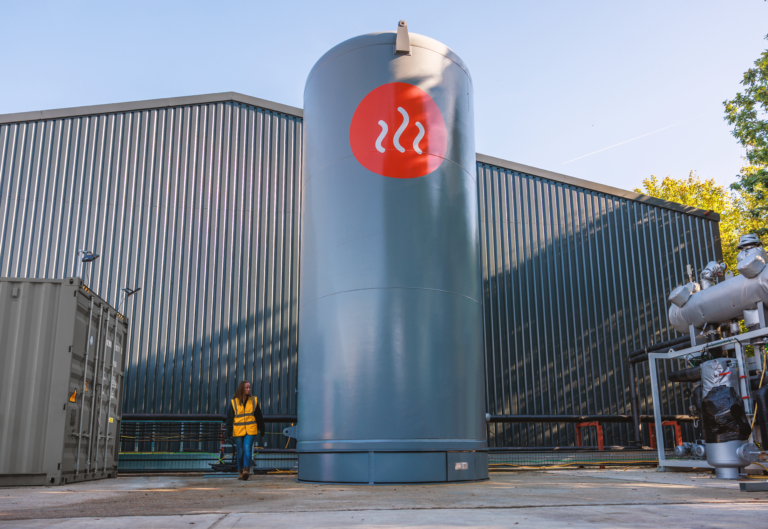
Based in Hampshire, UK Caldera is on a mission to make sustainable, zero-carbon heat accessible and affordable for industry. Leveraging patented technology that has captured attention from 12 sectors across 15 countries, they’re tackling one of the climate crisis’s most overlooked challenges: Industrial Heat.
Industrial heat remains one of the most stubborn challenges in the transition to net zero. Sectors such as food production, pharmaceuticals and brewing depend on steam for process heat, typically generated by gas-fired boilers. Globally, industrial heat accounts for roughly 20–25% of carbon emissions, with a large share required at temperatures between 100–200°C.
The difficulty is structural. Manufacturers must decarbonise while maintaining reliability and controlling costs. Electrification appears an obvious route, yet it introduces new constraints. Electric boilers consume power in real time, exposing operators to peak electricity prices and often requiring expensive grid upgrades. In parallel, grid capacity limitations can delay or prevent connection increases altogether. <!–more–>
Caldera, a UK-based clean technology company, has developed a system designed to address these constraints directly. Its Storage Boiler converts renewable electricity, whether on-site or from the grid, into stored heat that can be delivered as steam on demand. This decoupling of electrical charging from heat delivery is key to enabling cost-effective decarbonisation of industrial heat.
The system is built on three core technical innovations. First, a proprietary thermal storage material —a composite of volcanic rock and recycled aluminium delivers high thermal conductivity at low cost, enabling rapid charge and discharge. Second, a vacuum insulated storage vessel minimises heat loss, allowing energy to be stored at high temperatures for extended periods without large, site-built infrastructure.
Third, an integrated heat extraction system converts stored energy into steam efficiently and on demand, interfacing directly with existing industrial steam networks. These innovations are combined into a modular system comprising a Heat Cell, a heat exchanger connected to existing infrastructure, and a power and control system that manages charging. A typical configuration can store around 10 MWh of thermal energy and deliver 4 tonnes per hour of steam, with round-trip efficiency of 94%.
The practical implication is flexibility. Instead of purchasing electricity when steam is needed often during peak periods—operators can charge when electricity is cheaper. The system is designed to optimise against wholesale markets and time-varying grid charges, using spare grid capacity and increasingly frequent low- or zero price periods. Heat is then dispatched as required.
This has three immediate benefits:
1.Lower energy costs: shifting consumption away from peak electricity pricing
2.Reduced infrastructure requirements: avoiding or deferring grid upgrades
3.Greater system flexibility: enabling participation in balancing and capacity markets
The technology is designed for both retrofit and new-build scenarios. In existing facilities, Storage Boilers operate alongside gas boilers, reducing fossil fuel use while preserving redundancy. In new sites, they can be paired with high-temperature heat pumps to enable fully electric heat systems, removing the need for a gas connection.
Caldera’s impact is both environmental and economic, with results now evidenced in
real industrial use cases.
For customers, the system delivers three core outcomes:
1.Deep emissions reduction: enabling partial to full decarbonisation of industrial heat
2.Lower and more stable energy costs: through optimisation of electricity
purchasing
3.Capital efficiency: avoiding or deferring grid upgrades while improving project returns
In one near-term deployment, a customer has already electrified its lower- temperature heat using heat pumps. The remaining demand—high-temperature steam—will be fully decarbonised using a single Caldera Storage Boiler, enabling 100% electrification of site heat demand without requiring oversized grid connections or compromising operational reliability.
A UK food manufacturer combining a 5 MWp solar PV installation with thermal storage achieves a 27% reduction in imported energy, £0.7m annual energy cost savings, and a 4.4-year payback with £2.4m NPV. The storage system enables a larger, commercially viable solar array by allowing excess generation to be converted into process heat, rather than curtailed. The site operates five days per week, with further economic upside available under a seven-day operation.
While some sites integrate on-site renewables, the core value proposition does not depend on them. In most cases, value is driven by flexible grid charging—using low- cost electricity, avoiding peak tariffs, and capturing additional revenue from grid services.
What distinguishes this approach is system design. Industrial heat demand is continuous and variable, while electricity prices are increasingly volatile. Thermal storage bridgesthat mismatch, turning variable-cost electricity into predictable, dispatchable heat.
Decarbonising industrial heat has long been considered “hard to abate”. Alternatives such as hydrogen or carbon capture remain uncertain or location-specific. Thermal storage, by contrast, builds on established engineering and existing infrastructure. Caldera’s Storage Boiler does not change how industry uses heat. It changes how that heat is produced—combining flexibility, cost control and emissions reduction into a scalable pathway to zero-carbon industry.
Flowers are natural, so how bad can buying a bunch of flowers be? It’s a fair question but, despite being a natural product, the global cut flower industry is having a massive environmental and social impact on the planet

Globally, around 35 billion cut flower stems are sold every year, and in the UK the cut flower industry is worth £2.2 billion. Most flowers sold here (over 85%) are grown abroad, typically in countries like Kenya, Ecuador, Ethiopia and Columbia. They are cold-chain, air-freighted to The Netherlands before arriving by refrigerated truck to the UK. Growing cut flowers can have a huge carbon footprint. For comparison, an imported banana to the UK has a carbon footprint of 80g/CO2e whereas for a single rose stem it’s more likely to be around 1kg/CO2e.
Flowers, such as roses, are grown in high altitude, tropical areas, providing them with the perfect combination of year-round sunshine alongside cool night-time temperatures. The scale of these farms can be vast, with farms the size of Southampton not uncommon, and the largest farms equivalent to 900 football pitches. Farms are often situated in areas of high biodiversity value, in ecologically sensitive and drought prone regions. The water consumption for flower farms is enormous and there are well-documented examples, such as Lake Naivasha in Kenya, where water extraction for flower farms drastically depleted the water to surrounding communities and that water was severely polluted from the run-off of artificial fertilisers, herbicides and pesticides.
Less than 1% of global flower farms are Fair Trade certified, so the vast majority may operate with poor worker conditions, insufficient health and safety practices, and little or no regulation when it comes to chemical use. The pesticides routinely used can be those that are banned in the UK, and there is no upper limit set to the amount of pesticide residue permitted on flowers coming into this country. In France, 2022, a landmark case acknowledged the link of a child’s death to in utero pesticide exposure from her mother’s occupation as a florist. The health impacts of daily pesticide exposure for flower farm workers and the subsequent neurological impairment of their children is starting to become known.
MeadowSweet Posies is a multi-award winning sustainable online florist. Established in 2016, it’s the first ever flower subscription service to use exclusively British flowers and foliage throughout the year. A study by Lancaster University found that locally grown flowers have been found to have at least a 90% lower carbon footprint than air-freighted imported blooms, with British outdoor grown flowers to be 95% lower. In addition, locally grown flowers offer a gentle reminder of what is going on outside, celebrating the seasons and supporting local growers that grow seasonally using nature-friendly practices.
To date, MeadowSweet Posies has sent over 4000 bouquets of flowers to their eco-conscious customers. During the main growing season from March-October, the majority of flowers we use in our posies are outdoor grown and sent direct from the farm to our customers, minimising time in transit, and sent in plastic-free, eco-friendly packaging, using Royal Mail, the greenest parcel delivery service in the UK. In the winter months, we tend to use a higher proportion of flowers grown under glass, and we work with family farms that have incorporated a portfolio of environmental measures, such as waste agricultural biomass boilers for heating, rainwater re-harvesting for watering, solar for electricity, hedgerows and seed planting for birds and pollinators.
The approximate carbon footprint of an imported bouquet of 11 stems was calculated to be over 30kgCO2 from the Lancaster study, equivalent to a flight from London to Birmingham. Using the 90% lower carbon footprint as a conservative estimate, MeadowSweet Posies can demonstrate a saving of 108,000kg CO2 from its customers choosing to buy British grown flowers over imported flowers.
As a specific example, to reward its staff, a local financial planner company sent MeadowSweet posies to 25 staff members to thank them for their excellent work. Their decision to use MeadowSweet Posies aligned with their sustainability values and their desire to support a local women-founded business. Using the same calculation as previously, it can be shown that their purchasing decision reduced the associated carbon emissions of this purchase by 675kg/CO2 (approximately the equivalent emissions of a return flight from London to New York). In addition, they found the gesture was greatly appreciated by their staff who felt rewarded and valued and it helped to reinforce the positive working culture that the company has cultivated.
When it comes to assessing the environmental impact of an organisation, it is important to look beyond Scope 1 aspects, to the broader impacts of decision-makers. Purchasing decisions are an important consideration for an organisation’s Scope 3 impacts and to ensure there is alignment in the decisions made by employees alongside the values the organisation wishes to be represent.
Driving Value Through Sustainability
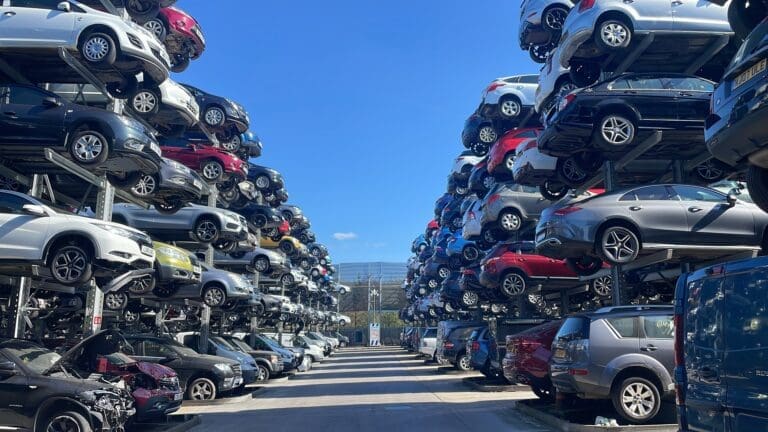
Silverlake Automotive Recycling has long been recognised as a forward-thinking leader in the vehicle recycling industry, but in recent years, the company has taken significant strides to embed sustainability at the heart of its operations. These efforts have not only reduced environmental impact, but have also delivered tangible business benefits by cutting costs, improving operational efficiency, and strengthening the company’s brand in an increasingly sustainability-conscious market.
At the core of Silverlake’s approach is a commitment to maximising resource recovery. By investing in advanced dismantling techniques and innovative recycling technologies, the company has significantly increased the proportion of each vehicle that can be reused or repurposed. This reduces waste sent to landfill while simultaneously creating new revenue streams from recovered parts and materials. Every component that is salvaged and resold represents both an environmental win and a financial gain, lowering disposal costs and boosting margins. Energy efficiency has also played a key role in cost reduction. Silverlake has implemented a range of initiatives across its sites, including energy-efficient lighting, optimised machinery usage, and the integration of renewable energy sources where possible. These measures have led to a noticeable decrease in energy consumption and utility costs. In an industry where margins can be tight and energy usage is significant, these savings provide a meaningful competitive advantage.
Operational efficiency has been further enhanced through digital transformation. By adopting smarter inventory management systems and streamlining logistics, Silverlake has improved the speed and accuracy of parts identification, storage, and distribution. This reduces handling time, minimises errors, and ensures that valuable components are brought to market more quickly.
The result is a more agile operation that can respond faster to customer demand while reducing unnecessary operational waste. Water management and pollution prevention initiatives have also contributed to efficiency gains. By implementing closed-loop systems and improving fluid recovery processes, Silverlake has reduced water usage and minimised the risk of environmental contamination. These measures not only support compliance with environmental regulations but also reduce the costs associated with water consumption and waste treatment.
Beyond operational improvements, Silverlake’s sustainability efforts have had a powerful impact
on its brand. Customers, partners, and insurers are increasingly prioritising environmentally responsible suppliers, and Silverlake’s proactive approach positions it as a trusted and progressive partner. By clearly demonstrating its commitment to sustainability, the company has strengthened relationships with key stakeholders and opened up new business opportunities. Transparency has been central to this brand-building effort. Silverlake actively communicates its
sustainability achievements, from recycling rates to carbon reduction initiatives, helping customers understand the positive impact of choosing recycled automotive parts. This not only
builds trust but also supports the broader shift towards a circular economy within the automotive
sector.
Employee engagement has been another important factor. By fostering a culture where sustainability is everyone’s responsibility, Silverlake has empowered its workforce to identify efficiencies and contribute ideas for continuous improvement. This has led to a more motivated team and a steady stream of incremental innovations that drive both environmental and business performance.
Ultimately, Silverlake Automotive Recycling demonstrates that sustainability is not just a moral imperative; it is a strategic advantage. By reducing costs, enhancing efficiency, and strengthening its reputation, the company has shown how environmental responsibility can go hand in hand with commercial success. As the industry continues to evolve, Silverlake’s approach provides a compelling model for how businesses can thrive by putting sustainability at the centre of their operations.

As businesses work towards ambitious sustainability targets, transport has emerged as one of the most immediate and impactful areas for change. Fleet emissions, fuel costs and environmental responsibility are no longer “nice to have” considerations; they are central to long-term business viability. At Snows Toyota and Lexus, we support organisations by turning those challenges into practical, lower-emission mobility solutions that reduce running costs and enable smarter, longer-term transport planning.
Practical Fleet Solutions for Local Businesses Toyota has long been recognised as a pioneer in low and zero emission mobility, and today offers one of the widest electrified model ranges available. This includes self-charging hybrid, plug-in hybrid and fully battery electric vehicles, allowing businesses to adopt a solution that fits their operational needs while still delivering measurable environmental benefits. A recent example of this can be seen in our work with the University of Portsmouth, where Snows Toyota supplied a fully electric vehicle fleet to support the University’s sustainability and carbon reduction goals. By transitioning to 100% electric vehicles, the University has: * Eliminated tailpipe emissions from its fleet * Reduced exposure to fluctuating fuel costs * Improved air quality across campus and surrounding areas * Demonstrated leadership in sustainable transport to students, staff and the wider community. The fleet now supports daily operational requirements while aligning transport usage with the University’s wider environmental strategy. This project highlights how electric vehicles are not a future concept, but a viable, cost-effective solution that is already delivering positive impact for organisations today. (Full case study available here: Snows Toyota parents with University of Portsmouth | Snows Lexus: Electrification Without Compromise Alongside Toyota, Lexus is redefining what sustainable mobility looks like for premium and executive users. Lexus has committed fully to an electrified lineup, combining zero emission driving capability with the comfort, refinement and reliability the brand is known for. The Lexus approach to sustainability extends well beyond the vehicle itself, guided by a 360 degree approach that looks at environmental impact across the entire lifecycle. Key elements of this approach include:
• A focused electrified model range, building on Lexus’s long-standing leadership in luxury hybrid technology.
• The use of sustainable and renewable materials, such as bamboo, kenaf and recycled plastics, within vehicle design and interiors
• A lifecycle approach that reduces emissions and waste from production through to end-of-life recycling, including second-life battery programmes.
For businesses, this translates into electric vehicles that support sustainability goals while delivering long-term value through lower running costs, reduced maintenance and responsible lifecycle management. Supporting Businesses at Every Stage of the Journey. We understand that every organisation is at a different stage of its sustainability journey. Whether you are taking your first steps towards electrification or transitioning an entire fleet, our expert teams at Snows Toyota and Lexus provide guidance on: * Choosing the right electrified vehicles for operational needs * Understanding real-world running costs and savings * Charging infrastructure considerations * Long-term sustainability and fleet planning.
Join Us at The Big Sustainability Expo
As exhibitors at The Big Sustainability Expo & Awards at the Utilita Bowl, we are proud to support organisations across the region in making meaningful, measurable progress towards their environmental goals. Visitors to our stand will be able to explore a wide range of Toyota and Lexus vehicles and speak directly with our experienced fleet team about tailored solutions for their business fleet. If your business is considering electrifying its fleet or reviewing its transport strategy, we invite you to speak with our team at the Expo or reach out to the Snows Toyota Corporate and Lexus Corporate teams to start the conversation today.
When businesses see how others have reduced costs, improved efficiency, or strengthened their brand through sustainable practices, it builds confidence to follow suit. It saves time and reduces trial-and-error. Instead of every company reinventing the wheel, our blog aims to act as a knowledge hub. Lessons learned, mistakes, and proven strategies are shared openly, helping others move faster and avoid costly missteps. It keeps businesses up to date. Sustainability is constantly evolving—new regulations, technologies, and expectations emerge quickly. The blog is designed to help organisations stay informed without needing to track everything themselves. It links sustainability to business value Done well, content can show how sustainability practices aren’t just ethical—they’re financially smart. Lower energy bills, reduced waste costs, stronger reputation, and better resilience all come into play. It builds a community and culture of change The blog creates a shared space where businesses, partners, and stakeholders can engage, learn, and contribute. That sense of momentum is often what turns isolated efforts into broader impact. In short, our Sustainability Blog turns sustainability from a buzzword into a toolkit—full of ideas, examples, and evidence that help businesses move from intention to implementation.